I’m not quite sure where Tracy had picked up this gem of information however she had and as a result we woke up on a sunny Saturday morning and decided to head over to Alki Beach. The reason for this trip was because this weekend was going to be the lowest tides of the year and all the creatures of the deep would be available for us to see, prod and poke!
This was meant to be particularly interesting for Toby as he had been learning all about the creatures in the Puget Sound over the last few weeks of school, including an enjoyable trip to the Seattle aquarium. With low tide due at 10:30am, we had breakfast, got dressed, hoovered the insides of the wellington boots in case they were full of spiders, and then set off to the beach.
Although it was still early when we got over there (relatively speaking) Alki was already busy. It’s a lovely place to go but it really does get busy over there and that probably stops us from going there more often. The good thing was that not everybody had the same insight as Tracy and they had all positioned themselves on the beach with the great views of Seattle. If they had gone round the corner and over to the western side they would have seen much more exciting things!
We parked the car, put our spider free boots on and went down onto the beach. It was an absolutely beautiful morning which was improved still further by the sight of Washington ferries whizzing around the islands – Tracy was happy!
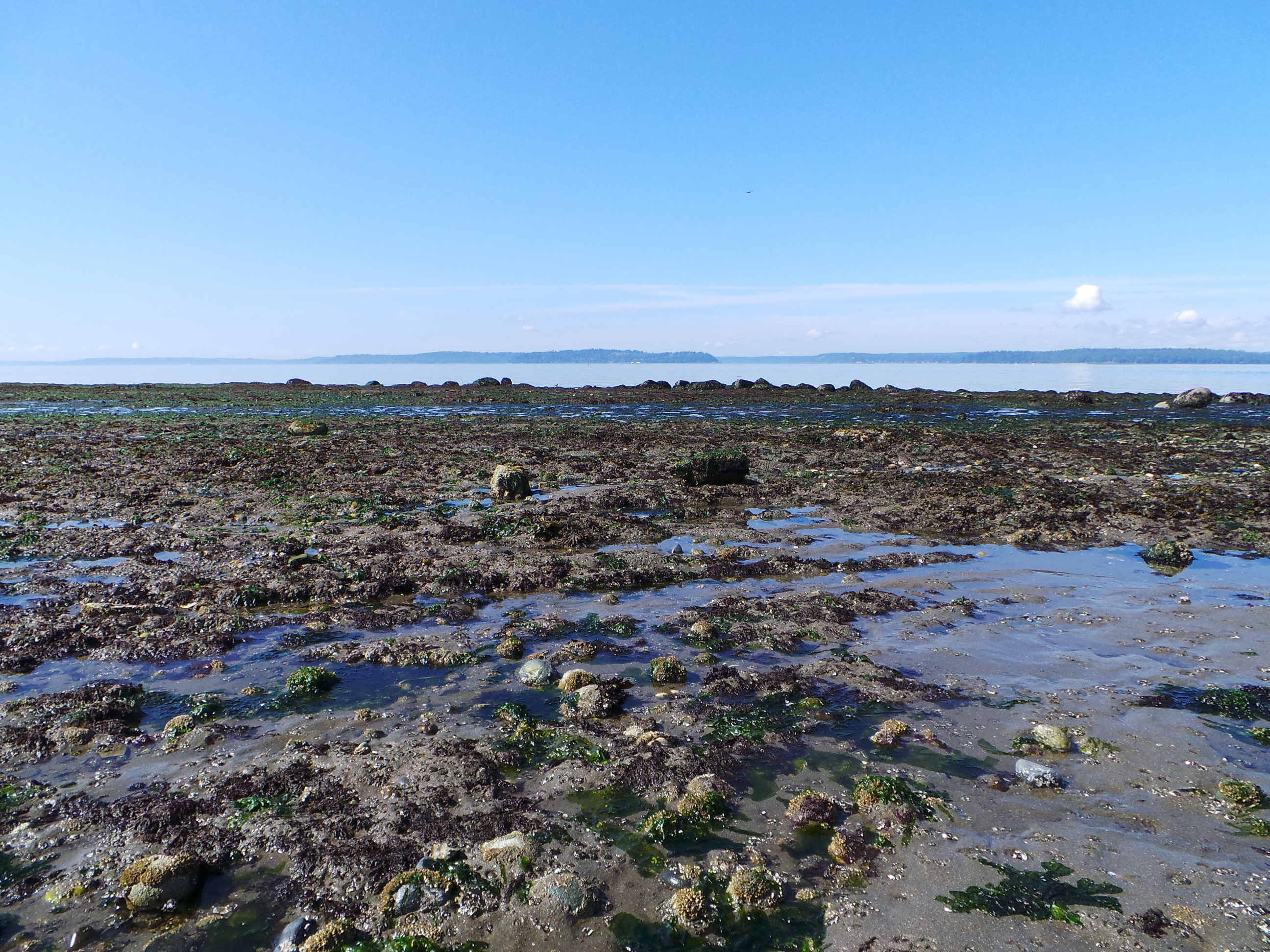
There weren’t many people there to begin with so we had the beach almost to ourselves. As we worked our way to the rocky areas near the waters edge we began to see a few creatures lurking under the seaweed:
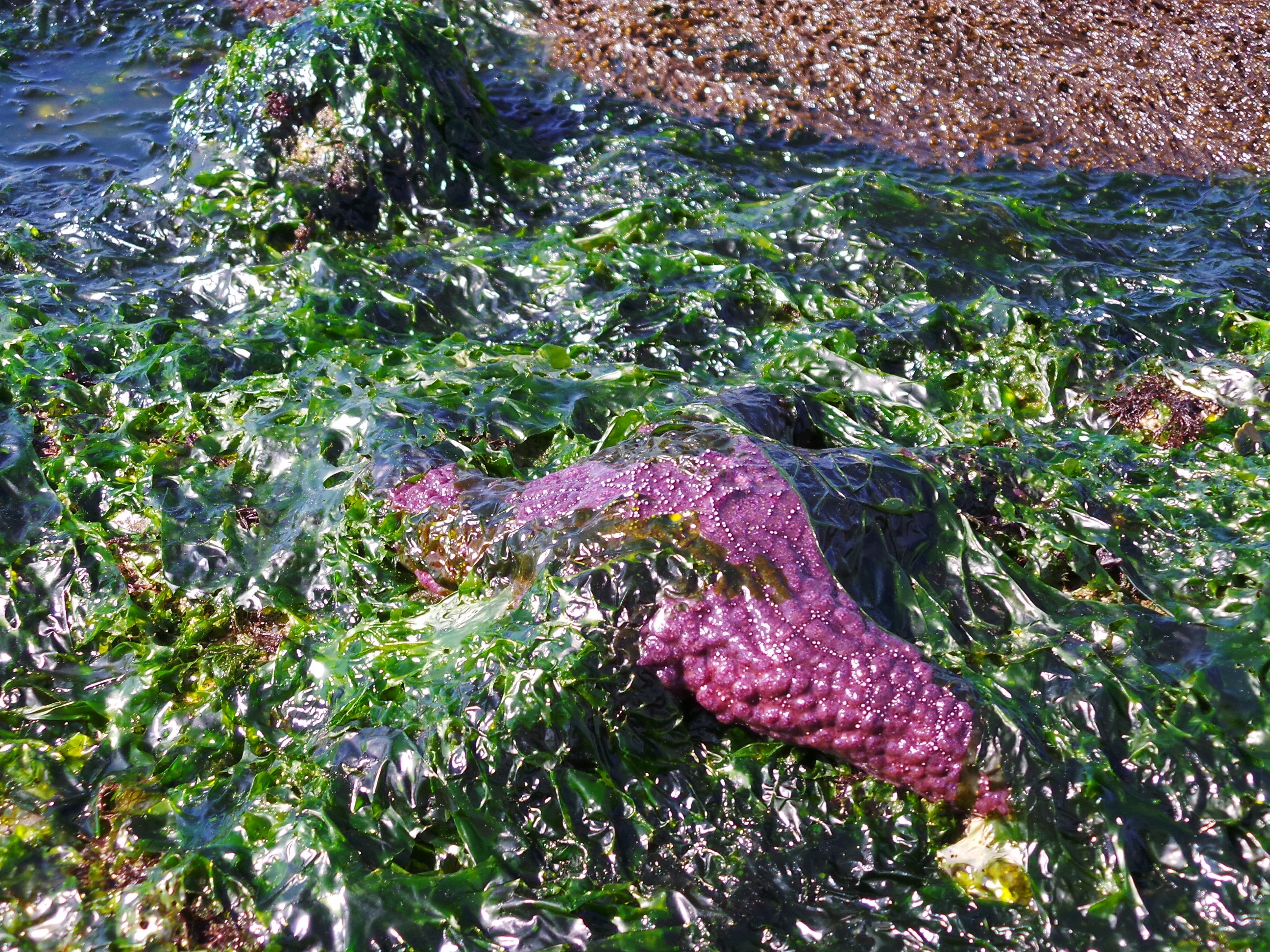
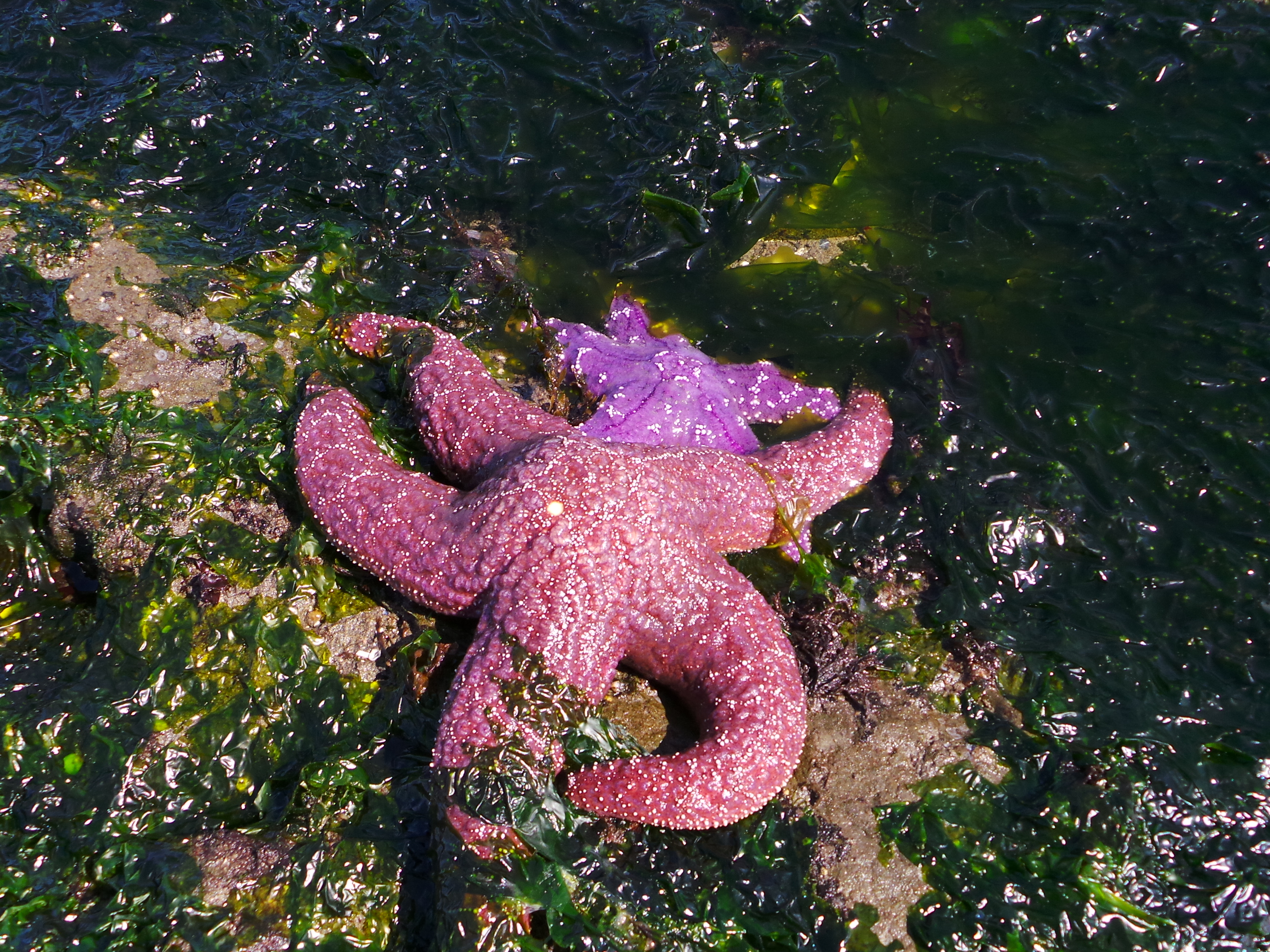
This next one, according to the rangers from the Seattle aquarium who were out telling people what everything was, is a mother and baby starfish, or sea star as they call them over here. It was very exciting seeing our first few sea stars but then soon we could see them everywhere! There literally were hundreds of them, and as the beach got busier across the morning, I dread to think how many were squashed!
We also spotted a sea cucumber:
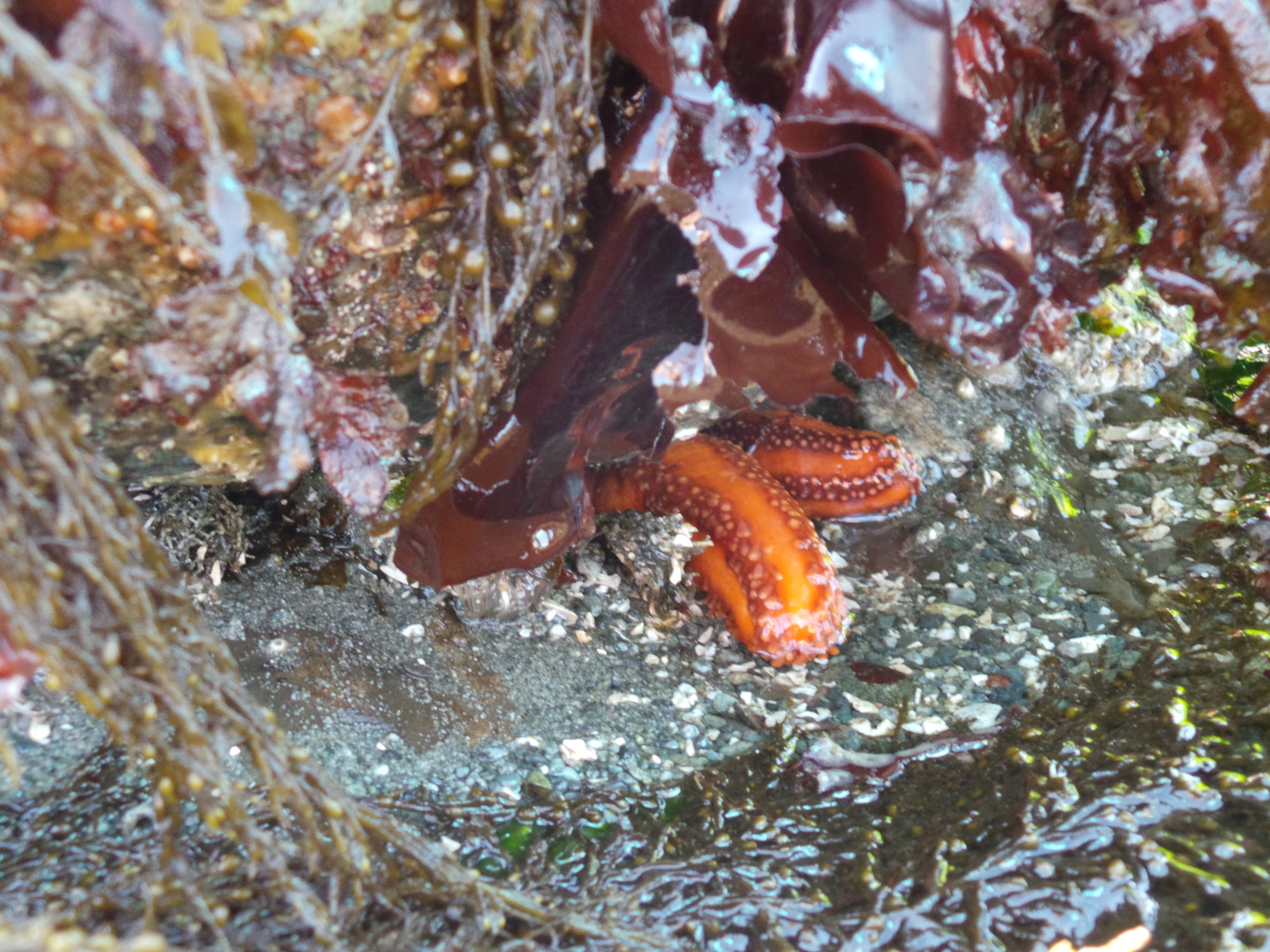
The interesting fact about the sea cucumber is that when it is scared it “pukes its guts up” and shoots it at the thing that it is scared off. It then goes hungry for a couple of weeks as it grows its guts back! It literally does puke its guts up and not just the contents of its guts!
Toby was keen, after his trip to the aquarium to see a moon snail. Unfortunately we didn’t get to see the snail but we did get to see the eggs that one had laid:
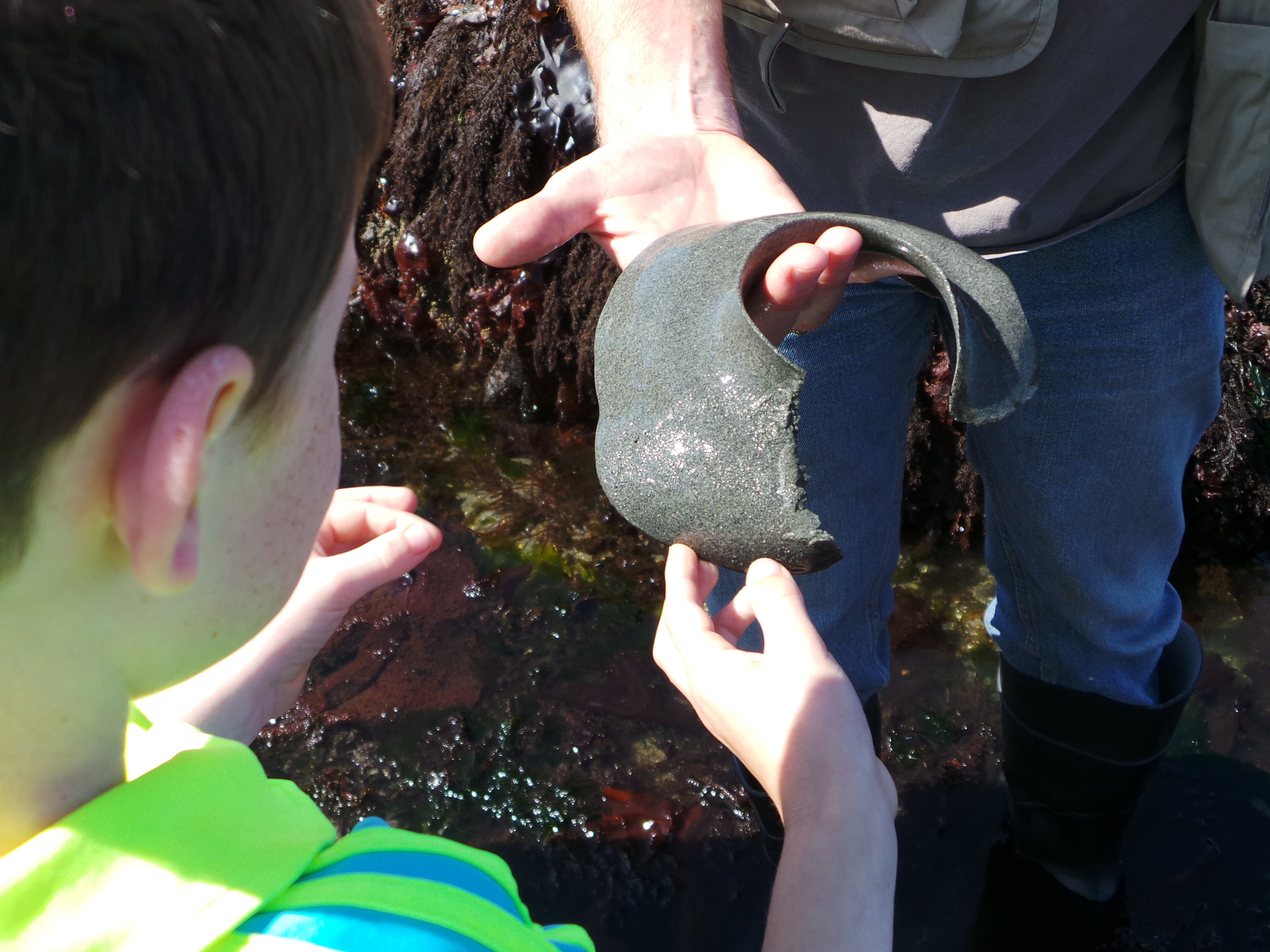
The smooth grey thing is a mix of hundreds of thousands of moon snail eggs, sand and snail mucus! The round area in the middle of that “thing” is where the snail shell was – they grow to about the size of a softball. Throughout our time down there the aquarium rangers were telling us all these interesting facts, which made it much more fun as we would have had no clue otherwise! The boys were particularly surprising to Tracy and I as they spent all their time going up to the rangers, asking questions and asking what things were. They are definitely more confident and talkative than they were!
I spotted this next thing but I can’t remember exactly what it was called though. It’s basically a snail without a shell (aka a slug) and it’s called something like the nude snail:
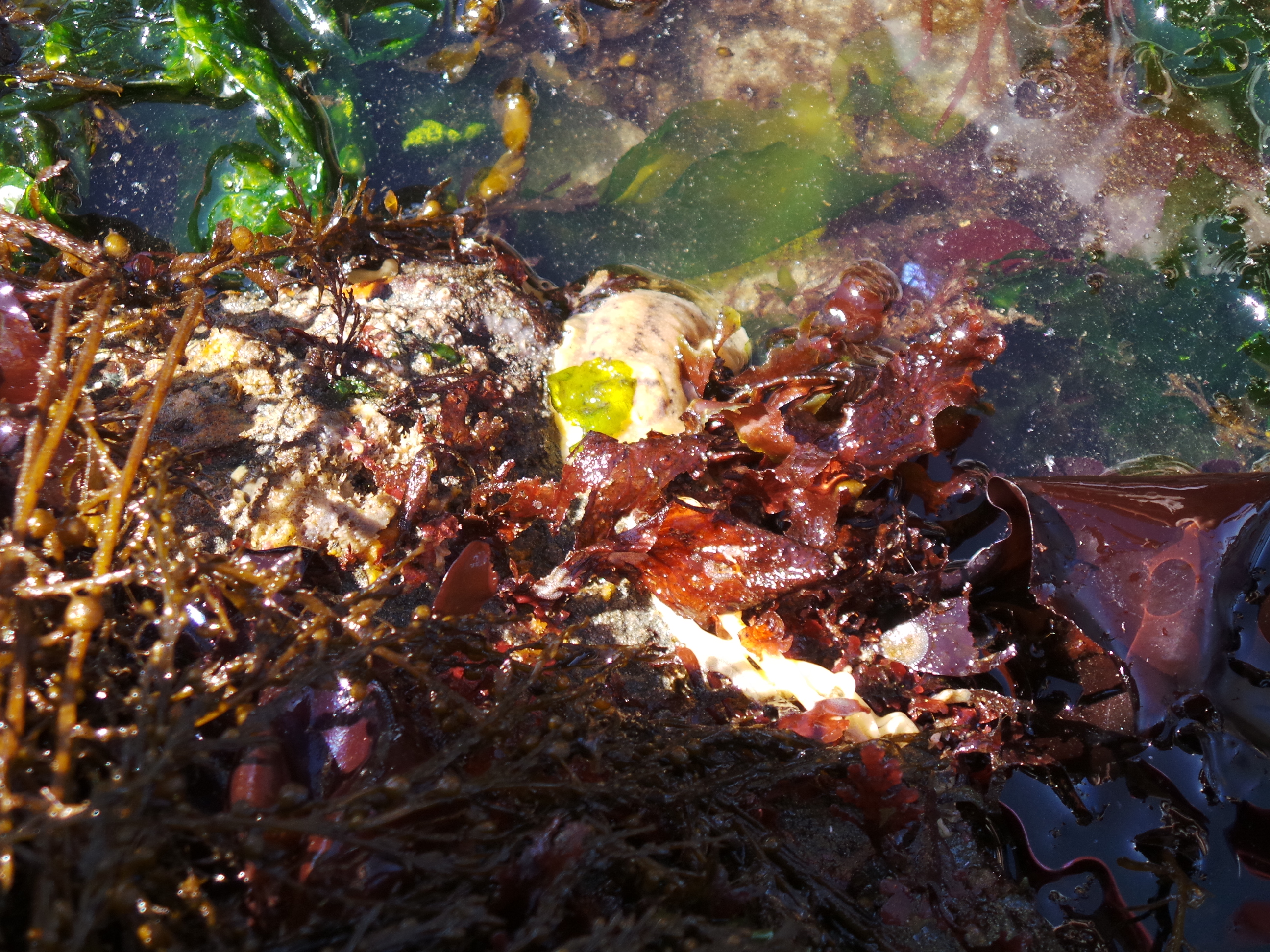
This next creature, is called a Kiton, and I think Harry spotted this one. If you can’t see it take a look by the green seaweed: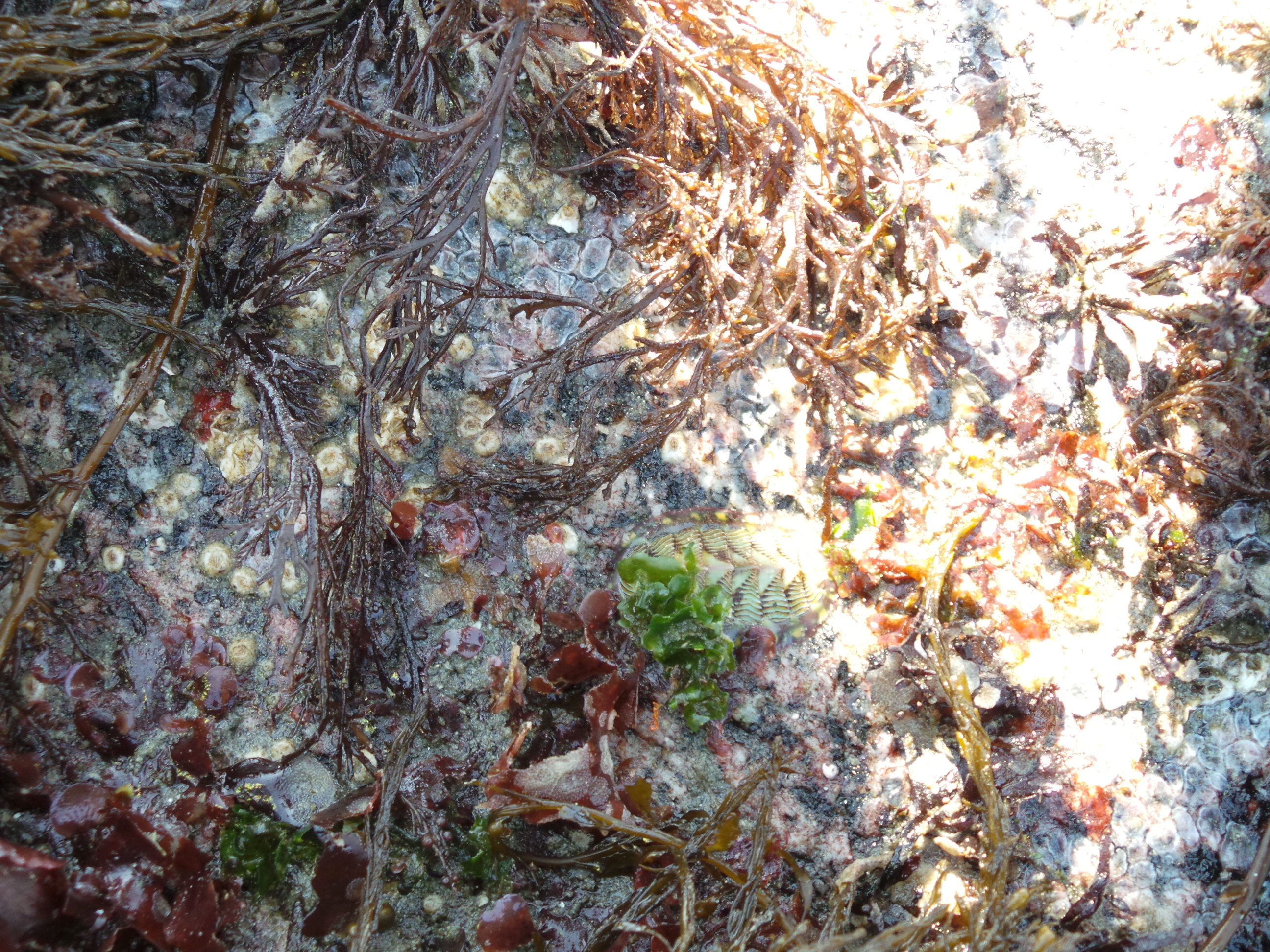
This creature dates back to when the dinosaurs roamed the planet. I’m not sure that this one was actually alive then but others definitely were. In amongst all the excitement of finding these creatures we also saw an osprey flying about and then swoop down to catch a fish. Unfortunately I was so engrossed in the sea creatures that I didn’t see it dive but I did hear the splash and see it fly off with a fish. It was all happening!!
Another common site was the red rock crab:
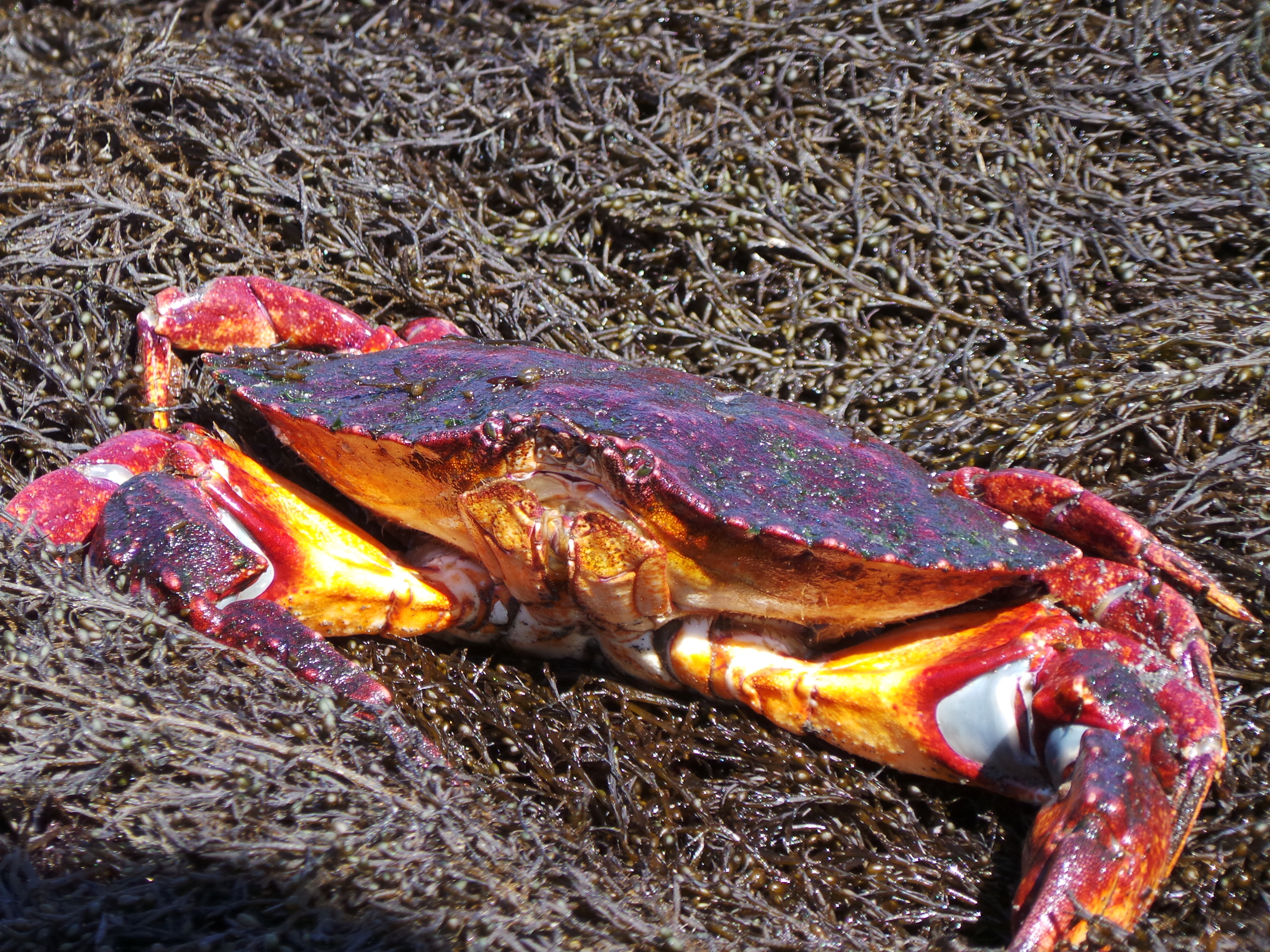
This particular crab was a whopper. The interesting fact we learnt about crabs is that if they have black ends to their claws then you should be careful because that means they have extra strong claws and will break your fingers if they are about! Non black tipped claws are not so strong.
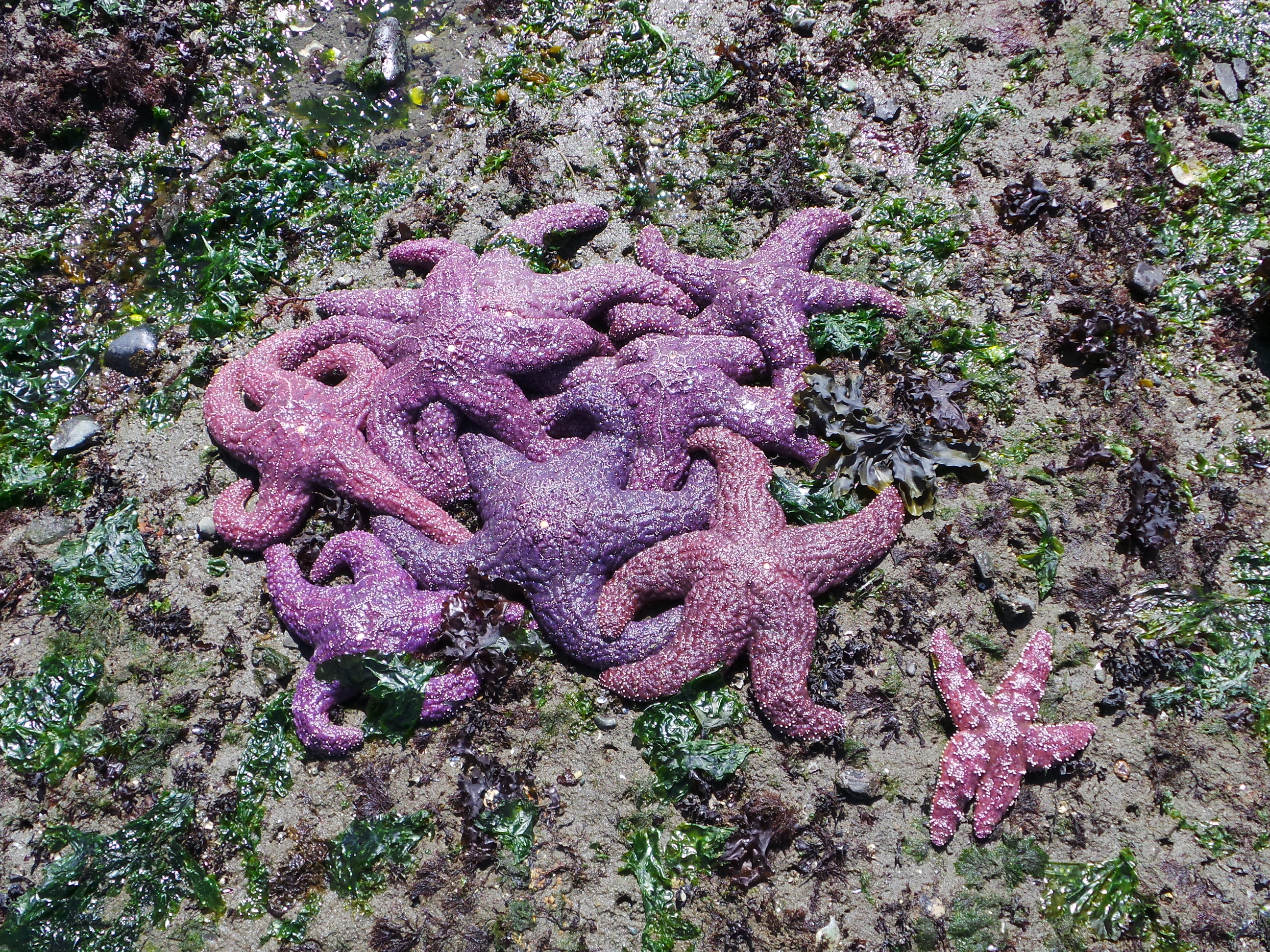
During all this time we had to be very careful not to step on the sea stars. The most common variety around was the purple sea star which is the name of the purple and orange sea stars! This particular species has slightly tougher skin and they can survive longer out of the water. The other variety we saw was the sun star which has more legs than your regular sea star. These have softer skin and cannot last as long out of the water. They can grow up to three feet wide but we didn’t see any of those. We did see this one though which we moved into the water.
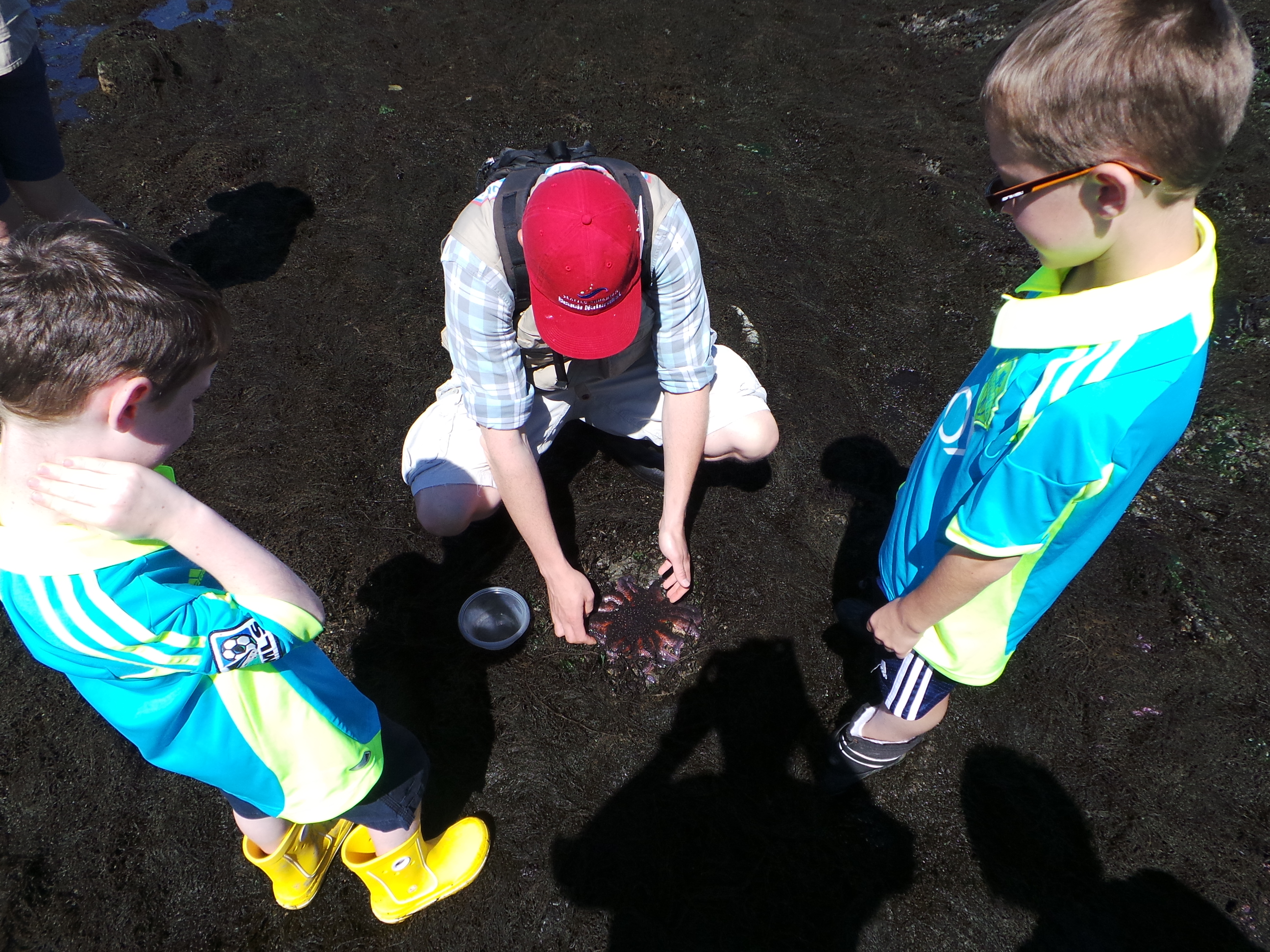
Harry also moved a smaller one into the water but not that delicately – he took it down to the waters edge and then dropped it into the sea! Poor thing! I’m sure it survived though. After a few hours nosing about and seeing other things like shrimp, different types of crabs, small boys (not ours) falling in the water, gunnal (which is something like an eel), Christmas anemones, anemones eating jellyfish, jellyfish, the guts of a sun star (they also puke them up!) and then a small dead sea otter it was time to go (lots more pictures are here).
A very entertaining and educational morning had left us hot and hungry so we were straight off from the beach to a restaurant! Tough life!!