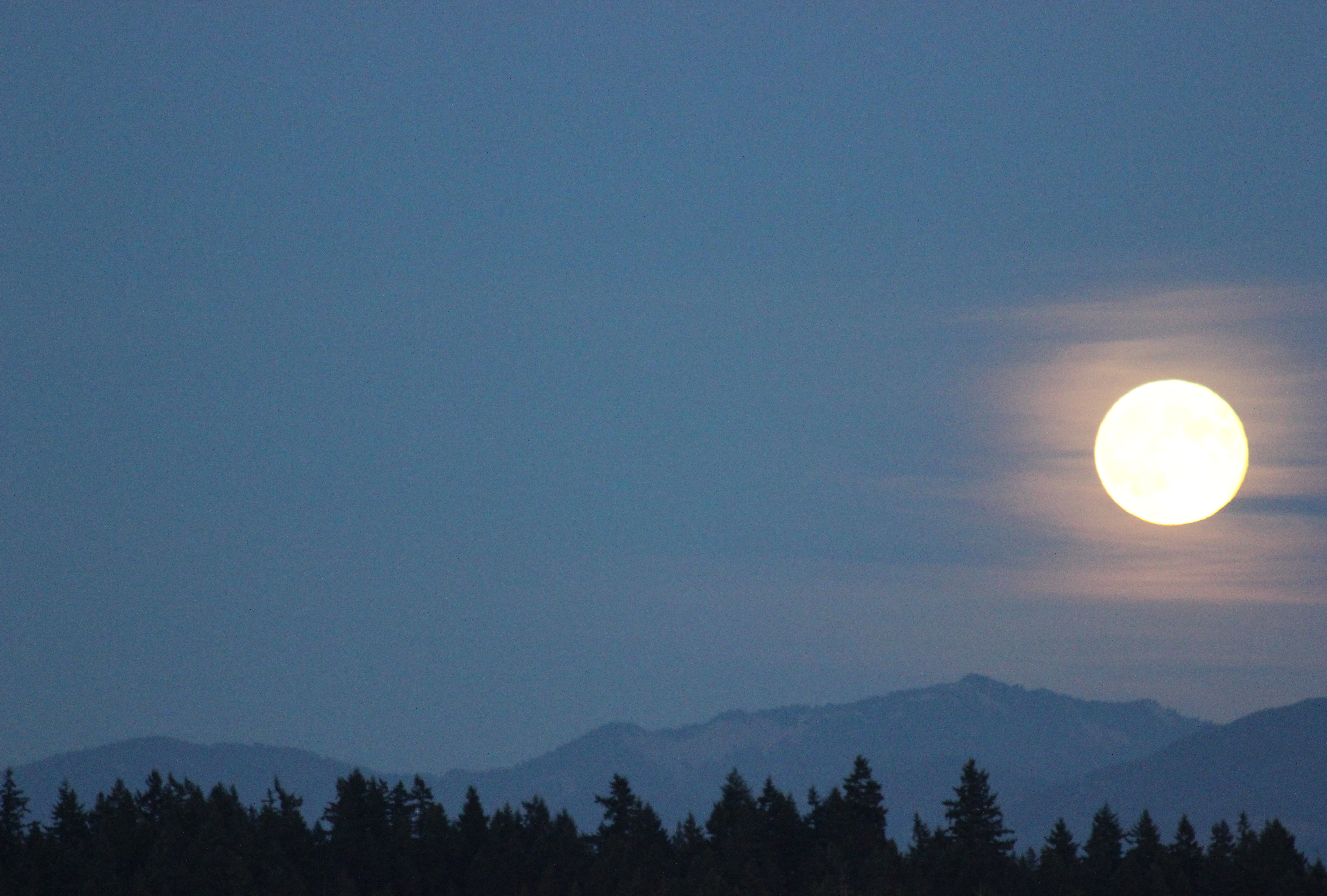
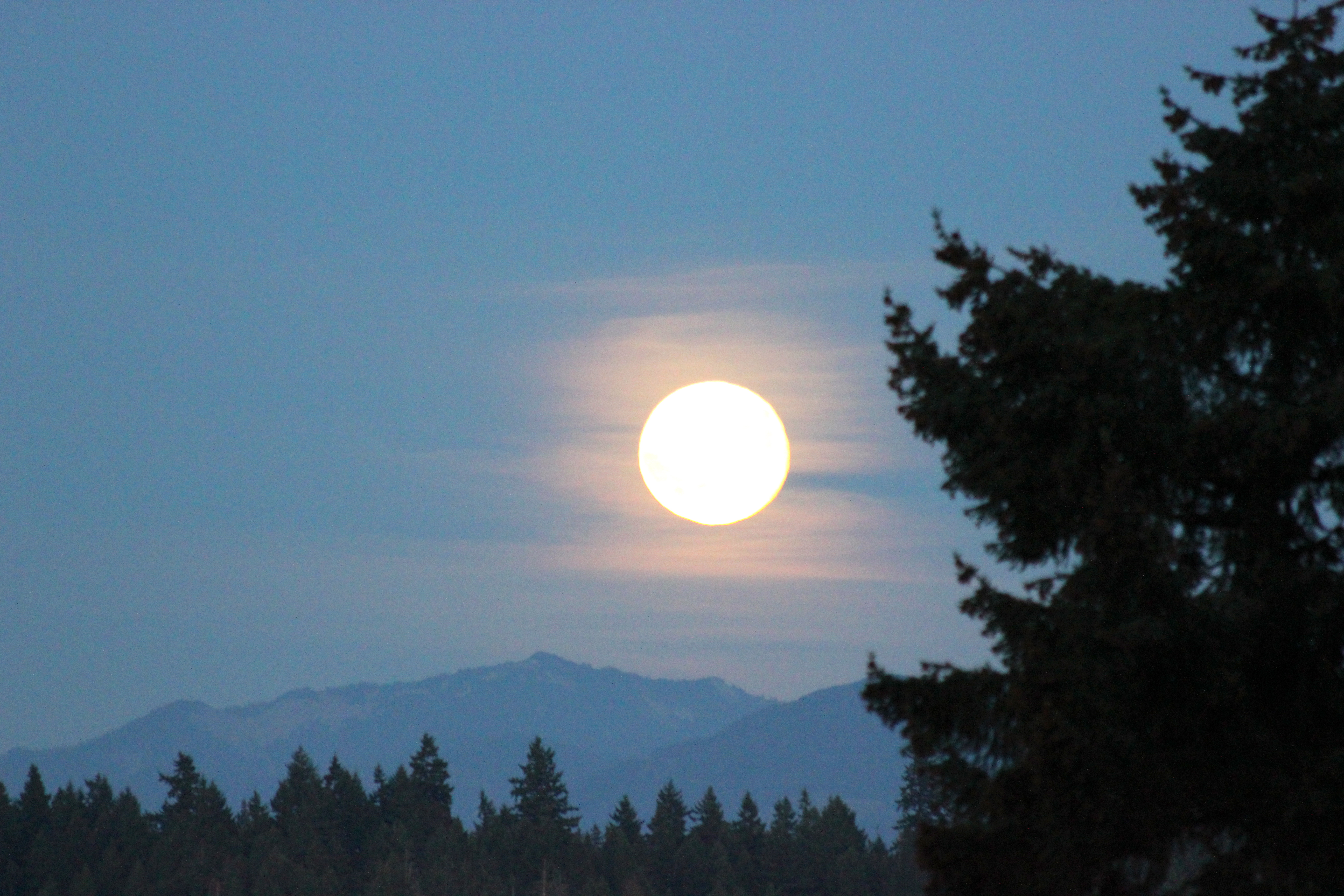
We have had a fabulous moon over this weekend and after a little digging it turns out that it is so fabulous because it is the Harvest Moon. Or the Wine Moon. Or Singing Moon, or the Blue Corn Moon and occasionally the Elk Call Moon.
And what exactly is the Harvest, Wine, Singing, Blue Corn or Elk Call Moon all about I hear you ask? Well let me tell you. The full Harvest Moon is the full moon that occurs closest to the autumnal equinox.
All full moons rise around the time of sunset. Because the moon orbits the earth in the same direction the earth is rotating, the moon rises later each day – on average about 50 minutes later each day (24/29.5 hours, or the number of hours in a solar day divided by the number of solar hours it takes for the moon to orbit the earth). The Harvest Moon and Hunter’s Moon are unique because the time difference between moonrises on successive evenings is much shorter than average. The moon rises approximately 30 minutes later from one night to the next, as seen from about 40 degrees N. or S. latitude. Thus, there is no long period of darkness between sunset and moonrise for several days following the actual date of the full moon. In times past this feature of these autumn moons was said to help farmers working to bring in their crops, or in the case of the Hunter’s Moon, hunters tracking their prey. They could continue being productive by moonlight even after the sun had set. Hence the name Harvest Moon.
The reason for the shorter-than-usual rising time between successive moonrises around the time of the Harvest- and Hunter’s-Moon is that the plane of moon’s orbit around the earth makes a narrow angle with respect to the horizon in the evening in autumn.
So there we go – that’s all you need to know about the Harvest Moon, and this is what it looked like this evening. Very lovely I’m sure you will agree!